From TPO to 60-Mil EPDM: A Residential Flat Roof Replacement in Uptown Minneapolis
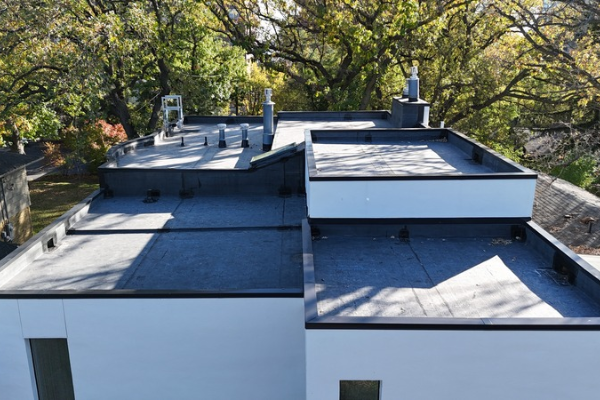
For single-family homeowners across Minneapolis, St. Paul, and the Twin Cities metro, a reliable flat roof is the difference between a quiet winter and a ceiling stain that turns into a five-figure repair. Flat and low-slope roofs on homes in neighborhoods like Uptown take a beating: freeze-thaw cycles, ice dams, hail, and heavy spring snow melt. Recently, the crew at Englund Roofing & Sheet Metal — a family-owned contractor serving the Twin Cities since 1994 — completed a residential flat roof replacement that shows exactly how we approach these projects. Here’s how an aging TPO roof became a fully adhered 60-mil EPDM rubber system built for Minnesota weather.
TPO Roof Failure Signs
When we inspected this homeowner’s flat roof, the existing TPO membrane was showing classic signs of climate fatigue. While TPO is a common roofing material, older or improperly installed systems often struggle against Minnesota’s extreme temperature swings. During our inspection, we noted several of the common signs of failure. It was clear an entire roof replacement would be the most benefital way to proceed with this client.
TPO failure signs:
- Seam Separations: TPO relies on heat-welded seams. Over time, thermal expansion from intense summer sun and contraction during -20°F winters cause these welds to weaken and pull apart, allowing snowmelt to sneak directly into the roof assembly.
- Shrinkage and “Tenting”: As older TPO membranes age, they lose their elasticity and shrink. This pulls the membrane tight across 90-degree transitions at parapet walls, skylights, and chimneys—lifting the sheet away from the roof deck and tearing it away from its fasteners.
- Cold-Weather Brittleness: Thermoplastic roofs stiffen in freezing temperatures, making them highly vulnerable to cracking under heavy ice loads, falling branches, or someone walking on the roof to clear snow.
- Crazing and Exposed Scrim: Years of UV exposure cause the top layer of the membrane to dry out and develop micro-cracks (crazing). Once the top layer erodes, the underlying reinforcing fabric (the scrim) is exposed. This fabric acts like a wick, pulling moisture straight into the insulation.
- Deteriorated Flashings: The molded TPO accessories around plumbing vents and chimneys had begun to delaminate and crack from constant thermal cycling and standing moisture.
Whatever the membrane, a roof that leaks at the seams is a roof that has reached the end of its service life. The homeowner wanted a long-lasting, low-maintenance solution, and after a free inspection, we recommended a full tear-off and a 60-mil fully adhered EPDM rubber roofing system.
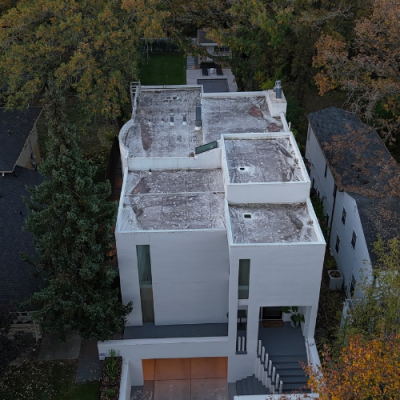
A Clean Slate — TPO Tear-Off Down to the Wood Deck
Proper flat roof replacement starts with a complete tear-off. For this project, we removed the old TPO membrane, insulation, and flashing all the way down to the wood deck.
Why go all the way down? Because the deck tells the truth. Removing everything lets our crew inspect the structure for hidden moisture damage, rot, and delaminated decking — problems an overlay would simply bury, along with the old leaks.
A solid deck is what guarantees the new roofing system has a flawless foundation.
Upgrading Thermal Performance with New Insulation
Minnesota’s climate demands a well-insulated roof. Once the deck was prepped and dried in, we installed new 1.5-inch polyiso over the existing recovered insulation, bringing the total to current Minnesota energy code requirements.
Rigid insulation does two jobs:
- Thermal resistance (R-value): keeps heat inside during -20°F January weeks and blocks heat gain during July heat waves, cutting year-round energy costs.
- A smooth, uniform substrate: EPDM membrane performs best over a flat, consistent surface — no ponding, no bridging.
The 60-Mil Fully Adhered EPDM Rubber Roofing System
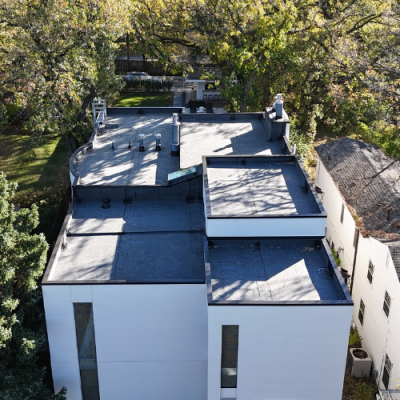
With insulation in place, we installed a premium 60-mil fully adhered EPDM (ethylene propylene diene monomer) rubber membrane. Here’s why this system was the right call for this home:
- 60-mil thickness: The extra thickness provides serious puncture resistance against hail, fallen branches, foot traffic, and debris — a real advantage over thinner 45-mil membranes.
- Fully adhered application: The membrane is bonded to the insulation with high-strength adhesive across the entire roof surface. That keeps the membrane locked down in high winds and limits lateral water migration if a puncture ever does occur — damage stays local instead of tracking across the whole roof.
- Cold-climate flexibility: EPDM stays flexible in extreme cold, so it expands and contracts with Minnesota’s freeze-thaw cycles instead of splitting at seams and transitions.
- Proven track record: EPDM has protected roofs in cold climates for over 50 years, with typical service lives of 20–30 years when properly installed.
Trust Englund Roofing & Sheet Metal for Your Flat Roof
We’re not a franchise and we don’t do high-pressure sales. Englund Roofing & Sheet Metal is a family-owned, fully licensed (MN License #RR780995) and insured contractor that has been serving Minneapolis, St. Paul, and Twin Cities suburbs like St. Louis Park, Bloomington, Edina, and Golden Valley since 1994. Our crews handle residential flat roof replacement in Minneapolis, EPDM flat roof installation across the Twin Cities, and 24/7 emergency leak repair — 365 days a year.
If your flat roof is leaking, bubbling, or past its prime, don’t wait for the next thaw. Call (651) 917-7663 or contact us online for a free inspection.
FAQ Section
Q: Why replace a TPO roof with EPDM instead of new TPO?
A: Both are excellent systems, and we install both. In this case, the homeowner prioritized maximum puncture resistance and cold-weather flexibility over TPO’s reflective surface. EPDM’s black membrane also absorbs heat in winter, which helps melt snow and ice on low-slope roofs. The right answer depends on your roof, your building, and your priorities — we’ll walk you through it during the inspection.
Q: How long does a 60-mil EPDM roof last in Minnesota?
A: A properly installed 60-mil fully adhered EPDM system typically lasts 20–30 years, even in freeze-thaw climates like the Twin Cities.
Q: How much does residential flat roof replacement cost in Minneapolis?
A: It depends on roof size, decking condition, insulation, and membrane choice. Most residential projects in the Twin Cities fall in the mid-four to low-five figures. Englund Roofing & Sheet Metal provides free, written estimates after an on-site inspection.
Q: Do you serve my suburb?
A: We serve the entire Twin Cities metro, including Minneapolis, St. Paul, St. Louis Park, Bloomington, Edina, Golden Valley, and surrounding communities.