
Low-Slope Shingle-to-TPO Roof Replacement on Broadway St NE, Minneapolis
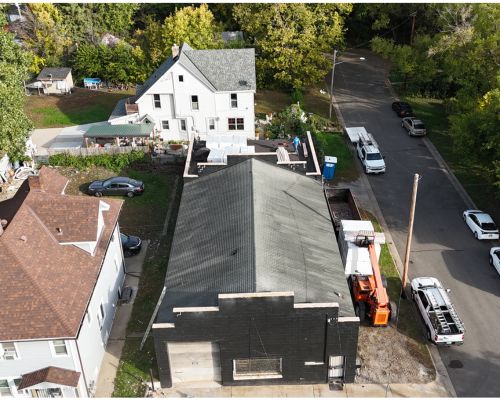
When asphalt shingles are installed on a low-slope roof, leaks are rarely a matter of if—they are a matter of when. On low pitches, slow water runoff, ice damming, and wind-driven rain can easily back up under standard shingles. On a recent project along Broadway Street NE in Northeast Minneapolis, the team at Englund Roofing resolved this exact issue. We stripped away failing shingles and weathered torch-down roofing to install a continuous, energy-efficient 60-mil Gray TPO membrane system built specifically for low-slope performance in Minnesota climates.
Why Shingles Fail on Low-Slope Roofs
While asphalt shingles perform well on steep residential slopes where gravity rapidly pulls water downward, low pitches (typically under a 4:12 slope) present severe challenges:
- Capillary Action & Wind-Driven Rain: Heavy rain easily creeps under shingle tabs when water does not drain rapidly.
- Winter Ice Dams: In Minneapolis winters, snow melt collects along the eaves and parapets, freezing into ice dams that push water backward underneath shingle underlayment.
- Multiple Patchwork Layers: Over decades, commercial properties often accumulate a patchwork of shingles alongside torch-down (modified bitumen) repairs, trapping moisture in the decking below.
On this Broadway St NE property, our crew stripped the existing shingle sections and torch-down layers down to the deck substrate, inspecting the structure to ensure a solid foundation.
The Insulation Upgrade: Staggered R-30 Polyisocyanurate
With the deck prepped, our crew upgraded the building’s thermal envelope. Commercial and low-slope roofs lose an enormous amount of indoor heating during sub-zero Twin Cities winters if not properly insulated.
To maximize thermal efficiency, we installed two layers of 2.5-inch polyiso insulation boards, bringing the roof assembly to an R-30 thermal resistance value.
Installing two separate layers allows the joints to be staggered and offset, effectively eliminating thermal bridging—the gap where indoor heat escapes between single boards. The continuous insulation creates an airtight thermal barrier that significantly reduces heating and cooling demands.
The Waterproofing: 60-Mil Gray TPO Membrane with RhinoBoard
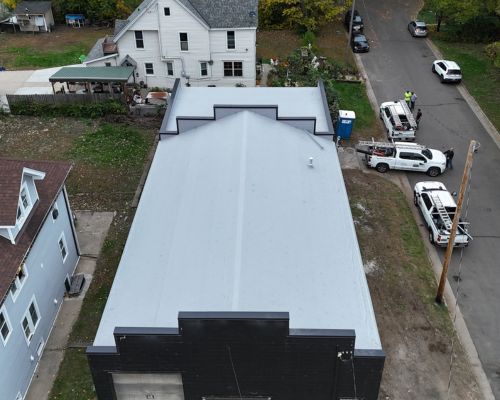
To replace the failing shingles, we installed a 60-mil Gray TPO (Thermoplastic Polyolefin) single-ply membrane over a rigid RhinoBoard substrate:
- Monolithic Protection: Unlike shingles, which rely on thousands of overlapping seams, TPO rolls are mechanically attached and hot-air welded together at the seams. The welded seams are physically fused, making them stronger than the sheet itself and entirely impervious to standing water.
- Engineered for Parapets & Ridges: The gray TPO was cleanly terminated and detailed around the building’s front stepped parapet walls and coping, preventing moisture from entering perimeter joints.
- Impact & Puncture Resistance: Backed by rigid RhinoBoard, the 60-mil membrane resists hail, flying storm debris, and rooftop foot traffic.
- Cold-Weather Flexibility: TPO expands and contracts through Minneapolis’s 100-degree temperature swings without cracking, shrinking, or delaminating.
Trusted Low-Slope & Commercial Roofing in Minneapolis
Whether dealing with a flat deck or a low-pitch roof, choosing the right roofing system is critical to protecting your building’s structural integrity.
Family-owned and locally operated, Englund Roofing specializes in low-slope conversions, commercial flat roof tear-offs, custom architectural sheet metal, and high-efficiency insulation retrofits throughout the Minneapolis–St. Paul metro.
Schedule an On-Site Roof Assessment
If your low-slope roof is showing signs of water intrusion, sagging, or outdated shingle wear, contact the professionals at Englund Roofing.
▶ Watch the Transformation Video on Facebook
Call: (651) 917-7663
Service Area: Minneapolis, St. Paul, and the surrounding Twin Cities metro